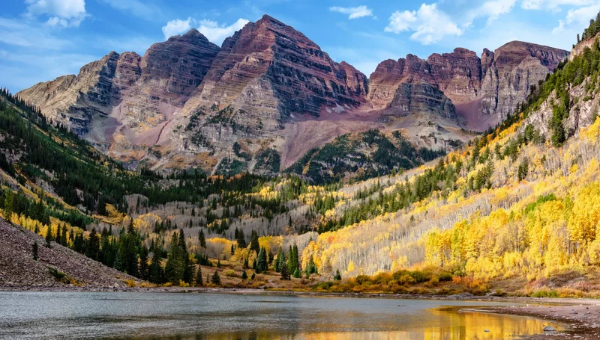
Your Complete Guide to Douglas County, Colorado
Douglas County, Colorado
If you're looking for the quintessential Colorado suburban lifestyle — great schools, wide open space, a strong sense of community, and a commute into Denver that's actually manageable — Douglas County has been drawing buyers in for decades. And for good reason.
Stretching 843 square miles between Denver and Colorado Springs, Douglas County is consistently ranked as the wealthiest county in Colorado and seventh among the wealthiest in the entire United States by median household income. It's also one of the healthiest counties in the country — U.S. News & World Report placed it second-healthiest of 3,143 U.S. counties, with residents averaging a life expectancy of 84 years. These aren't just statistics. They reflect a community that has invested heavily in quality of life: top-rated schools, extensive trail systems, pristine state parks, and a range of communities that each bring something distinct to the table.
Whether you're drawn to the small-town charm of Castle Rock, the polished planned community of Highlands Ranch, the family-friendly energy of Parker, or the quiet prestige of Castle Pines, Douglas County offers a variety of lifestyles within the same zip code of mountains, trails, and opportunity.
(Sources: U.S. Census Bureau; U.S. News & World Report County Health Rankings)
Douglas County at a Glance
County Seat: Castle Rock
• Population: ~399,000 (2025 estimate, U.S. Census Bureau)
• Major Communities: Highlands Ranch, Castle Rock, Parker, Lone Tree, Castle Pines, Castle Pines Village
• Median Sale Price: $698,437 (Redfin, September 2026)
• Median Household Income: Highest of any Colorado county; 7th highest nationally
• School District: Douglas County School District RE-1 — rated A by Niche, #10 in Colorado
• State Parks: Castlewood Canyon, Roxborough, Chatfield (shared with Jefferson County)
• Top Industries: Aerospace & defense, financial services, healthcare, technology
• Key Highways: I-25, C-470, E-470, Highway 85
Housing Styles and Architecture
Douglas County's housing stock spans several decades of suburban growth, which means distinct architectural eras depending on which community you're shopping in.
• Planned community homes (1980s–2000s): Highlands Ranch was developed as one of the largest master-planned communities in the country. Homes from this era feature stucco and brick exteriors, open layouts, and HOA-managed common areas. Well-maintained and consistently popular with families.
• Transitional and contemporary builds (2000s–2010s): Dominant in Parker and Castle Rock's established neighborhoods. Two-story layouts, stone accent exteriors, three-car garages, and finished walkout basements that take advantage of Colorado's rolling terrain.
• New construction: Active in Castle Rock (Crystal Valley Ranch, Terrain, Rhyolite), Parker (Inspiration, Stonegate), and growing areas near Castle Pines. Energy-efficient, open-concept designs with smart home features. Strong demand from buyers who want low-maintenance, move-in-ready properties.
• Custom and semi-custom homes: Castle Pines Village and Bell Mountain Ranch feature estate-level custom architecture on larger lots. These are the standout prestige properties of the county.
• Ranch-style homes: Less common than in older Denver suburbs, but available in Castle Rock's more established sections and in rural eastern areas of the county.
Communities and Neighborhoods
Highlands Ranch
Highlands Ranch is the largest community in Douglas County and one of the most well-known planned communities in the country. Built from the ground up with intentional design, it features four rec centers operated by the Highlands Ranch Community Association (HRCA) — each offering pools, fitness facilities, tennis courts, ice skating, climbing walls, and more. The community is dense by Douglas County standards, which means walkability is better than most suburbs and amenities are everywhere. Schools are among the best in the state. Commute to downtown Denver runs 20–30 minutes on a good day, making this one of the most accessible communities in the south metro. Home prices range from attached townhomes in the $400Ks to estates well above $1M.
Castle Rock
Castle Rock is the county seat and the community that arguably best captures what Douglas County is all about. It has a genuine, walkable downtown with independent restaurants, boutiques, the iconic rock formation that gives the city its name, and a community calendar packed with events year-round. Philip S. Miller Park — a 681-acre regional park — anchors the outdoor recreation scene with miles of trails, a challenge course, and one of the longest lift-served tubing hills in Colorado. New construction is active in Crystal Valley Ranch and Terrain, while the historic downtown draws buyers who want character alongside convenience. Castle Rock is the longest commute of the major Douglas County communities — 35–50 minutes to Denver — though the rise of remote and hybrid work has made that far more manageable for many buyers.
Parker
Parker has one of the strongest community cultures in the county. Mainstreet Parker — a pedestrian-friendly historic corridor — hosts farmers markets, festivals, and events that give the town a genuine sense of place. Youth sports infrastructure here is exceptional, and the elementary and middle schools draw consistent praise from parents. Parker is slightly pricier than Castle Rock for comparable homes but offers a commute of 25–40 minutes from the northern areas. The community also has excellent access to Cherry Creek State Park and the regional trail network. We've previously built a full territory page for Parker — refer there for more detail.
Lone Tree
Lone Tree punches well above its size. Despite being a smaller city, it's home to major corporate headquarters, the Park Meadows mall (the region's premier shopping destination), the Lone Tree Arts Center, and several top-tier restaurants. Its proximity to the Denver Tech Center and light rail access make it the most convenient commuter community in Douglas County. Lone Tree also has some of the highest property values in the county, with a mix of upscale condos and single-family homes in the $700K–$1.5M+ range.
Castle Pines and Castle Pines Village
Castle Pines is an incorporated city with a quieter, more residential character — well-landscaped neighborhoods, good schools, and a relaxed suburban pace. Castle Pines Village, adjacent to it, is a separate gated community that's in a different category entirely: two private golf courses (The Country Club at Castle Pines and Castle Pines Golf Club, which has hosted The International PGA tournament), estate-level homes, and a level of privacy and prestige that draws a very specific buyer. If you're comparing to Cherry Hills Village in Arapahoe County, Castle Pines Village is the Douglas County equivalent.
Roxborough Park / Roxborough Village
A smaller community tucked against the foothills just northwest of Littleton's border, Roxborough Park sits adjacent to Roxborough State Park and delivers a dramatically scenic setting — red rock formations as your backyard, wildlife as your neighbors. Homes here are somewhat isolated from the broader Douglas County hub, which is part of the appeal for buyers who want to feel removed from suburbia while still being in the metro area. A more niche community, but one with devoted fans.
Outdoor Recreation and Open Space
Douglas County is exceptional for outdoor access — three state parks within its borders is a distinction almost no other Front Range county can match. Combined with an extensive trail system, regional parks, and easy mountain access, it's a legitimate outdoor lifestyle destination.
Roxborough State Park
Roxborough is the crown jewel of Douglas County's outdoor landscape. Its dramatic red sandstone formations — similar in character to Garden of the Gods in Colorado Springs — rise from the foothills in a way that feels otherworldly. The park is a day-use-only natural area (no camping), which preserves a quiet, wildlife-rich environment. Key trails include the Fountain Valley Loop (2.5 miles, gentle terrain with two overlooks and a historic site), the South Rim Trail (just under 2 miles with sweeping north valley views), and Carpenter Peak (6 miles round-trip, ~1,000 ft elevation gain, views of downtown Denver and Pike National Forest). Accessible year-round; snowshoeing in winter is popular.
Castlewood Canyon State Park
Located near Franktown on the county's eastern edge, Castlewood Canyon is a surprising find — a genuine canyon carved into the high plains, completely unlike the mountain terrain most people associate with Colorado. The ruins of the historic Castlewood Canyon Dam, which failed catastrophically in 1933, are still visible within the park. The canyon supports a variety of wildlife and offers moderate hiking through a genuinely dramatic landscape.
Chatfield State Park
Shared between Douglas and Jefferson Counties, Chatfield Reservoir anchors a massive multi-use park that supports boating, sailing, fishing, swimming, camping, and more. Popular with families for weekend lake days, and a staging point for cyclists heading into the foothills.
Philip S. Miller Park — Castle Rock
A 681-acre regional park within Castle Rock that includes miles of hiking and mountain biking trails, a challenge course, and Adventure Summit — a lift-served tubing experience that draws crowds in winter. One of the best-developed regional parks in the south metro.
Trail Network
The Highlands Ranch trail system alone covers over 70 miles of maintained paths. Parker, Castle Rock, and other communities add hundreds of additional miles of regional and neighborhood trails. The county is genuinely bikeable between communities in some areas, and the Cherry Creek Regional Trail connects into the broader metro trail network.
Arts, Culture, Dining, and Community Life
Douglas County communities each have their own distinct feel when it comes to dining and culture — there's no single "downtown" for the whole county, which actually gives buyers options based on the kind of community vibe they're looking for.
Castle Rock's downtown is the most distinctive in the county: independently owned restaurants, local coffee shops, a growing brewery scene, and the kind of walkable main street that most suburbs spend decades trying to manufacture but rarely achieve organically. The Outlets at Castle Rock draw regional shoppers, but it's the authentic downtown core that keeps residents coming back.
Parker's Mainstreet offers a similar community-first energy — farmers markets, the annual Parker Days festival, art on the streets, and a pedestrian-friendly layout that works. The Parker Arts, Culture & Events (PACE) Center is a standout community asset, hosting touring performances, local theater, and art exhibitions throughout the year.
Lone Tree's Lone Tree Arts Center is a jewel in the county's cultural landscape — a 500-seat performing arts venue that hosts national-level productions and a robust local program. Park Meadows, adjacent to the DTC corridor, offers the region's best upscale retail and dining options.
Highlands Ranch tends toward chain dining and suburban convenience, but the rec centers are genuinely impressive community spaces — the kind that build actual neighborhood bonds, not just amenity checkboxes.
Jobs and Economy
Most Douglas County residents commute into the Denver metro for work — the county's proximity to the Denver Tech Center, downtown Denver, and major employment corridors makes it a natural bedroom community for high-earning professionals. But the county also has significant employers of its own, particularly in aerospace and defense, financial services, and healthcare.
Douglas County has the highest educational attainment of any county in Colorado, which has made it a target for aerospace and technology companies seeking a skilled workforce. More than 27,000 aerospace employees work in the county, with major anchors including:
• Lockheed Martin — a major presence in the county
• Northrop Grumman — industry anchor helping draw smaller aerospace firms
• Safran Defense & Space — opened a Parker manufacturing facility in 2024
• United Launch Alliance — aerospace manufacturer in the region
• Canopy Aerospace & Defense — Littleton-based company using advanced 3D printing for space components; 25–30% of workforce are Colorado School of Mines graduates
Other major employers in the county include:
• Charles Schwab Corporation — significant presence (2,400+ employees)
• EchoStar (Dish Network) — major tech employer
• Western Union — corporate operations
• Sky Ridge Medical Center (HealthONE) — regional hospital and Level II Trauma Center
• Parker Adventist Hospital (Centura Health) — major healthcare employer
• Douglas County School District RE-1 — largest single employer in the county
The county actively recruits in aerospace, technology, financial services, and life sciences through the Douglas County Economic Development Corporation. Tax incentives and a streamlined permitting process make it one of the more business-friendly jurisdictions in the metro.
(Sources: Denver7 News; Wikipedia — Douglas County; Visit Castle Rock)
Weather and Climate
Douglas County enjoys the classic Colorado Front Range climate — more than 300 days of sunshine annually, low humidity, and the dramatic seasonal shifts that make Colorado feel like four genuinely distinct seasons. Winters bring periodic snowstorms, but Colorado's dry air and strong sun mean roads clear quickly and accumulation rarely lingers more than a day or two. Annual snowfall in the Castle Rock area averages 50–60 inches.
The county sits at elevations of roughly 5,600–6,200 feet, which is slightly higher than Denver and produces a bit more precipitation and slightly cooler temperatures year-round. Summers are warm and dry, with afternoon thunderstorms common in July and August. Springs and falls are exceptional — clear skies, moderate temperatures, and the kind of outdoor days that remind you why people move to Colorado in the first place.
Wildfire risk is lower here than in mountain communities to the west, but eastern foothills areas near Roxborough Park and the castle rock formations carry some interface risk in dry years. Buyers in those areas should ask about fire mitigation and review local hazard maps.
Cost of Living
Douglas County is one of the more expensive markets in the Denver metro — that comes with the territory (so to speak) when you're the wealthiest county in the state. But relative to Boulder, Cherry Creek, or the most desirable Denver neighborhoods, it offers meaningfully more square footage per dollar, newer construction, and in many cases, better school access.
The median home price of approximately $698,000 reflects the overall county — but that includes everything from Castle Rock townhomes in the $400Ks to Castle Pines Village estates above $3M. Most family-focused buyers at the $600K–$900K price point find the value equation quite strong compared to comparably priced neighborhoods in closer-in suburbs.
Property taxes are moderate by Colorado standards. HOA fees are common across the county, particularly in Highlands Ranch, Castle Rock's planned communities, and Castle Pines — these can range from $50–$400+/month and often include meaningful amenities (rec centers, pool access, trail maintenance). Colorado's flat income tax (4.4%) and absence of an estate tax continue to make it financially attractive for high earners relocating from California, New York, and other high-tax states.
Things to Know Before You Move to Douglas County
• It's a large county with very different lifestyles within it: Lone Tree feels urban-adjacent; Castle Rock feels like a small mountain town. Know which community fits your life before you search — they're not interchangeable.
• Remote work changed the math on commute distance: Castle Rock and eastern Douglas County communities that once seemed too far from Denver are now realistic for buyers working from home 3+ days a week. The tradeoff is real space, newer construction, and more bang per dollar.
• HOA fees are the norm, not the exception: Factor them in from the start. In Highlands Ranch, the HRCA fee covers access to four rec centers — it's genuinely worth it for active families. In other communities, HOAs cover less.
• Douglas County School District serves the whole county: Unlike some counties with a patchwork of districts, RE-1 covers all of Douglas County. Your school assignment depends on your neighborhood boundary, not which city you're in — confirm this with your agent for the specific address.
• Castle Pines Village is gated and private: If you're interested in that community, know that it has its own HOA, its own security, and its own vibe. It's not a typical subdivision — it's a lifestyle in itself.
• The eastern county is agricultural: Past E-470 and extending toward Elbert County, Douglas County transitions to open ranch land. If you're buying in that zone, expect rural conditions — well water, septic systems, gravel roads, and long drives to amenities. Some buyers love it. Know what you're choosing.
• Growth is ongoing: Douglas County has been one of Colorado's fastest-growing counties for decades and new construction is active in multiple communities. That brings new schools, new amenities, and new neighbors — and it also means some areas are still developing their character.
• It skews affluent and well-educated: The county has the highest educational attainment in Colorado. The community reflects that — high engagement in schools, community organizations, and local governance.
Ready to Find Your Home in Douglas County?
Douglas County is one of the most consistently high-performing real estate markets in Colorado — not because of hype, but because of what it delivers: community investment, outstanding schools, exceptional outdoor access, and a quality of life that's hard to replicate elsewhere in the state. Whether you're relocating from out of state, trading up from a closer-in Denver suburb, or finally making the move you've been thinking about, this is a market where the right home is worth the search.
The Shift Real Estate team knows Douglas County. We work with buyers and sellers across Castle Rock, Highlands Ranch, Parker, Lone Tree, Castle Pines, and the communities in between. Let's find out what matters most to you — and help you find the place that delivers it.
Contact Shift Real Estate today to start your Douglas County search.
Sources: Redfin — Douglas County CO Housing Market (September 2026) | U.S. Census Bureau — Population Estimates, Douglas County CO | U.S. News & World Report — County Health Rankings | Wikipedia — Douglas County, Colorado | Denver7 News — Douglas County Aerospace Industry | Douglas County Economic Development Corporation | Visit Castle Rock — Major Employers | Colorado Parks and Wildlife — Roxborough State Park | Meridian Group Real Estate — Castle Rock vs. Parker vs. Highlands Ranch Comparison
Shift Real Estate Listings

© 2026 Shift Real Estate
DMCA Notice | Terms & Services | Privacy Policy | Accessibility Statement
EQUAL HOUSING OPPORTUNITY


Shift Real Estate
PO Box 2015, Castle Rock, CO 80104
Mobile: 303-587-0312
diane@shift.realestate